DNS Security: Configuring DNS-over-HTTPS & DNS-over-TLS is one of those things that looks optional until the day it isn't. The setup is not hard; the discipline to keep it correct is. Treat the steps below as the floor, not the ceiling, and you will be ahead of almost every default configuration in the wild.
This guide walks through DNS Security: Configuring DNS-over-HTTPS & DNS-over-TLS using steps we have run on real hardware, not theory.
Before launching configurations, we recommend that you audit your baseline system. Check your active listening ports, log configurations, and network adapters. Remember: security is always a spectrum, not a binary state.
Most dns security: configuring dns-over-https & dns-over-tls failures come from all-or-nothing thinking. Someone enables every hardening switch, hits a wall, and turns the whole thing off. Build it in steps you can keep, and you will still be compliant in six months.
Legitimate anonymous profiles must be isolated completely at both the network layer (IP isolation) and the application layer (browser cookies and canvas hash signatures).2. Practical Deployment & Configuration Protocol
This section details the practical steps to deploy and configure the security rules required for dns-security. Ensure you have administrative or root permissions on your machine. We will configure security profiles, modify config parameters, and execute the necessary terminal directives. Please execute these scripts inside a test environment before deploying to production systems.
We will construct an administrative bash script. This script automates base checks, turns off non-essential telemetry processes, and injects secure configurations into network configuration profiles. Create a new file on your server or client terminal, paste the directives below, and make it executable.
# DNS Security: Configuring DNS-over-HTTPS & DNS-over-TLS readiness check
sudo apt-get update && sudo apt-get install -y iproute2 dnsutils curl tcpdump

# Active listeners
ss -tunlp

# Anti-spoofing on all interfaces
sudo sysctl -w net.ipv4.conf.all.rp_filter=1

# Baseline DNS resolver in use
resolvectl status 2>/dev/null || cat /etc/resolv.conf
Save that as zenonym-dns.sh and run it with sudo. Watch the output — if a step errors, stop and read it before continuing. AppArmor or SELinux may block a syscall; the journal (journalctl -f) will tell you which one.

3. Verification, Auditing and System Hardening
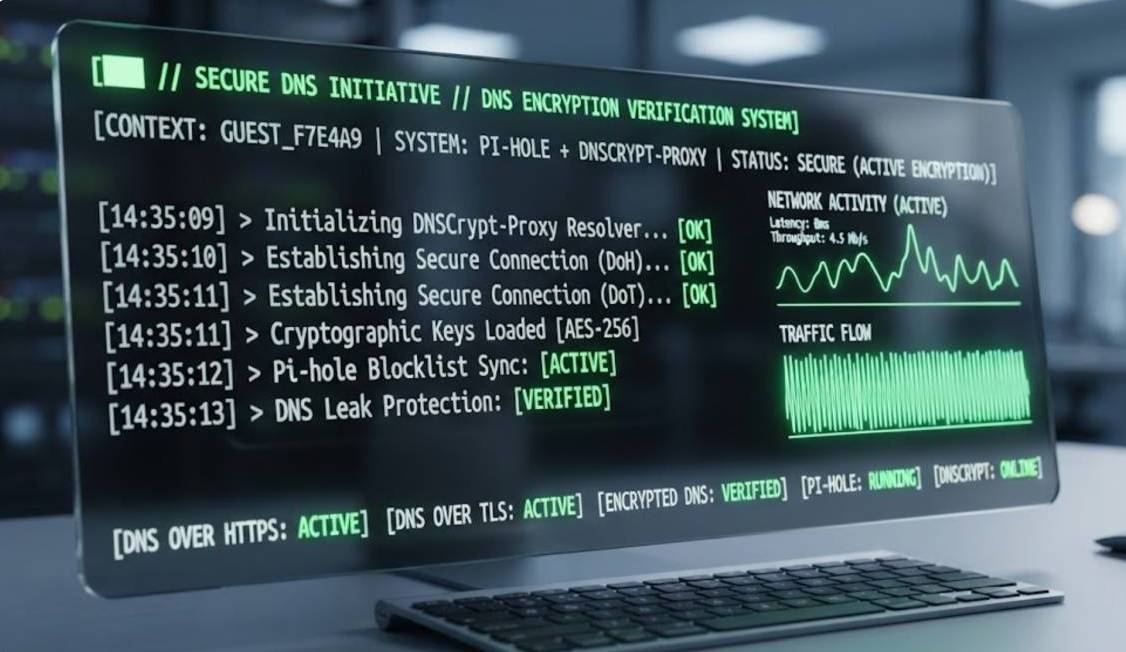
Verification for DNS Security: Configuring DNS-over-HTTPS & DNS-over-TLS has to happen on the live query path, not in theory. Before you call the setup done, capture DNS traffic and confirm it matches your chosen encrypted resolver path. The table below covers the most common failure modes for DoH and DoT deployments.
| Threat Vector | Impact | Remediation Action |
|---|---|---|
| Local DNS Cache Poisoning | Stub resolver returns wrong records | Flush local cache after resolver changes and validate with dig |
| Split-Tunnel Leakage | Some apps bypass DoH/DoT | Lock /etc/resolv.conf, disable systemd-resolved fallback, and audit per-app DNS |
| TLS Certificate Pinning Failure | DoT handshake aborts | Pin the resolver cert or use DNS-over-HTTPS as a fallback path |
After the table, run a leak test and confirm all browser/system queries follow the encrypted path. Even with DoH/DoT enabled, OS-level DNS, browsers with native DNS, and VPN clients can still send plaintext. Audit each path separately.
4. Hardening Checklist: Steps to Lock Down DNS Security
Ensure your operating systems and configuration parameters conform to the following standards:
- Run a live packet capture on DNS Security: Configuring DNS-over-HTTPS & DNS-over-TLS and confirm no plaintext DNS leaves the host.
- Back up resolver and local DNS config before changing systemd-resolved or NetworkManager settings.
- Disable unused resolver services and local DNS caches that could bypass DoH/DoT.
- Timestamp resolver changes and keep a rollback note for each modified config file.
- Separate system DNS from application-level DNS; browsers and containers often bypass system settings.
- Validate from an external machine or browser with DNS leak tests after every change.
The difference between a working DNS setup and a fragile one is usually one unchecked assumption. The packet capture shows whether queries are actually leaving over the expected encrypted path; the resolver check shows whether the system is using the provider you chose; the local cache audit shows whether a stale record is masking a misconfiguration. Treat every check as pass/fail, not advisory.
When DNS Security: Configuring DNS-over-HTTPS & DNS-over-TLS breaks, the symptoms are often subtle. Lookups succeed but from the wrong resolver, browsers ignore system DNS, or VPN clients leak outside the tunnel. In each case, compare before/after resolver state rather than guessing.
Keep DNS Security: Configuring DNS-over-HTTPS & DNS-over-TLS boring and auditable. Boring means no wild resolver switching, no ad-hoc local overrides without a ticket, and no mixing identities on the same resolver profile. If a change cannot be explained in one sentence, it does not belong in a production client.
A half-finished DNS Security: Configuring DNS-over-HTTPS & DNS-over-TLS rollout is worse than none. A split configuration, a forgotten IPv6 nameserver, or an unmonitored local cache can leak quietly. Test the reboot path explicitly and verify persistence from an external leak-test endpoint.
Final validation for DNS Security: Configuring DNS-over-HTTPS & DNS-over-TLS: capture traffic from a clean external machine, confirm all queries hit your encrypted resolver, and compare browser/system DNS paths. Reboot and repeat. If anything changes, the state did not persist.
One hard limit: DNS Security: Configuring DNS-over-HTTPS & DNS-over-TLS protects lookup confidentiality, not destination anonymity. Even encrypted DNS does not hide the fact that you reached a sensitive endpoint. Pair it with transport-layer encryption and threat-aware routing.
5. Frequently Asked Questions (FAQ) Regarding DNS Security
Will this break my routing or existing VPN clients?
Only if overlapping resolver or routing rules exist. Snapshot current rules and apply changes incrementally.
Do I need special hardware?
No. Any x86/ARM device that boots Linux, macOS, or Windows is sufficient.
How often should I re-verify?
After every OS update, resolver library update, or VPN client upgrade.
Disclaimer: The Zenonym research team is dedicated to providing accurate, tested security advice. Digital threat landscapes and software packages change constantly. Verify all configuration scripts inside isolated environments before running them on high-security machines.