Securing Your Home Router: Firewall Policies & Custom Firmware matters because the default setup assumes you have nothing to hide and nothing worth taking. That assumption is wrong for most people who end up here. The changes below are not about paranoia — they close gaps that are exploited routinely, quietly, and without a warning.
Securing Your Home Router: Firewall Policies & Custom Firmware is easier than the marketing copy suggests. Below is the concrete setup, start to finish.
Before launching configurations, we recommend that you audit your baseline system. Check your active listening ports, log configurations, and network adapters. Remember: security is always a spectrum, not a binary state.
Most securing your home router: firewall policies & custom firmware failures come from all-or-nothing thinking. Someone enables every hardening switch, hits a wall, and turns the whole thing off. Build it in steps you can keep, and you will still be compliant in six months.
Legitimate anonymous profiles must be isolated completely at both the network layer (IP isolation) and the application layer (browser cookies and canvas hash signatures).2. Practical Deployment & Configuration Protocol
This section details the practical steps to deploy and configure the security rules required for router-hardening. Ensure you have administrative or root permissions on your machine. We will configure security profiles, modify config parameters, and execute the necessary terminal directives. Please execute these scripts inside a test environment before deploying to production systems.
We will construct an administrative bash script. This script automates base checks, turns off non-essential telemetry processes, and injects secure configurations into network configuration profiles. Create a new file on your server or client terminal, paste the directives below, and make it executable.
# Preflight for Securing Your Home Router: Firewall Policies & Custom Firmware
sudo apt-get update && sudo apt-get install -y iproute2 dnsutils curl tcpdump

# Interfaces and routes as they stand now
ip -br addr
ip route

# Kill source spoofing
sudo sysctl -w net.ipv4.conf.default.rp_filter=1

# Quick DNS leak probe
dig +short myip.opendns.com @resolver1.opendns.com
Save that as zenonym-securing.sh and run it with sudo. Watch the output — if a step errors, stop and read it before continuing. AppArmor or SELinux may block a syscall; the journal (journalctl -f) will tell you which one.
3. Verification, Auditing and System Hardening
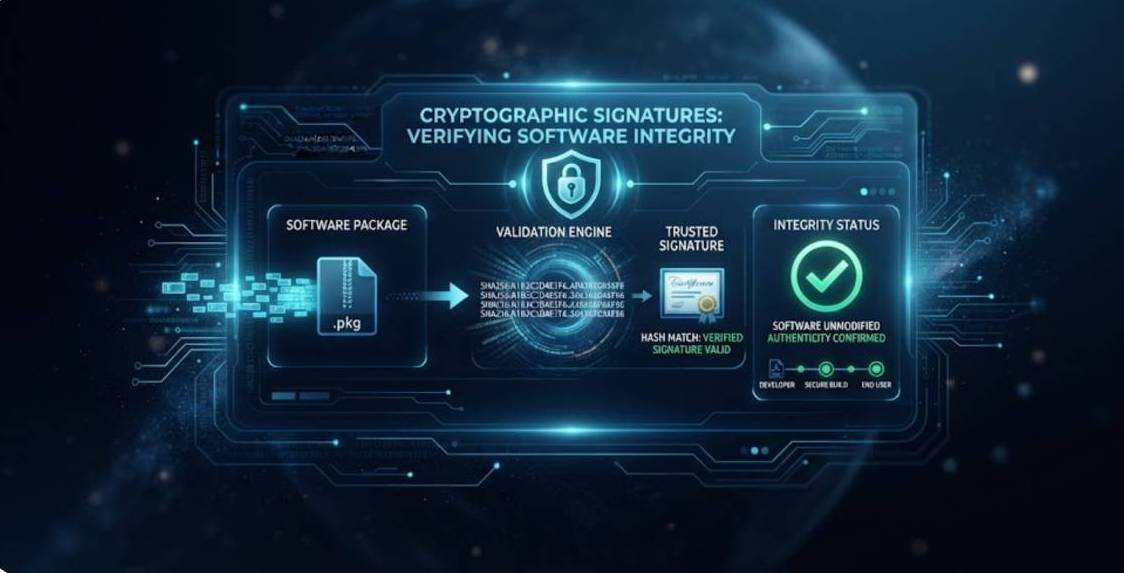
Verification for Router Hardening: Firewall and Custom Firmware has to happen on the live router configuration and network boundary, not in theory. Before you call the setup done, confirm remote admin is disabled, credentials are changed, firewall rules are active, and firmware integrity is verified after every update. The table below covers the most common failure modes in router hardening.
| Threat Vector | Impact | Remediation Action |
|---|---|---|
| Admin Interface Exposure | Web UI accessible from WAN | Disable remote admin and restrict access to LAN or wireguard management net |
| Default Credentials | Router uses factory password | Change admin password, disable unused accounts, and enable 2FA if supported |
| Firmware Tampering | Custom firmware image is unsigned | Verify firmware signature and keep recovery partition intact |
After the table, attempt to reach the admin interface from outside the trusted network and confirm access is blocked. Inspect active firewall rules and verify firmware checksum matches the expected signed image.
| Threat Vector | Impact | Remediation Action |
|---|---|---|
| DNS Query Leaks | ISP sees every domain | Route DNS through DoH/DoT, not port 53. |
| IPv6 Bypass | Traffic escapes the protected path | Disable or tunnel IPv6 explicitly. |
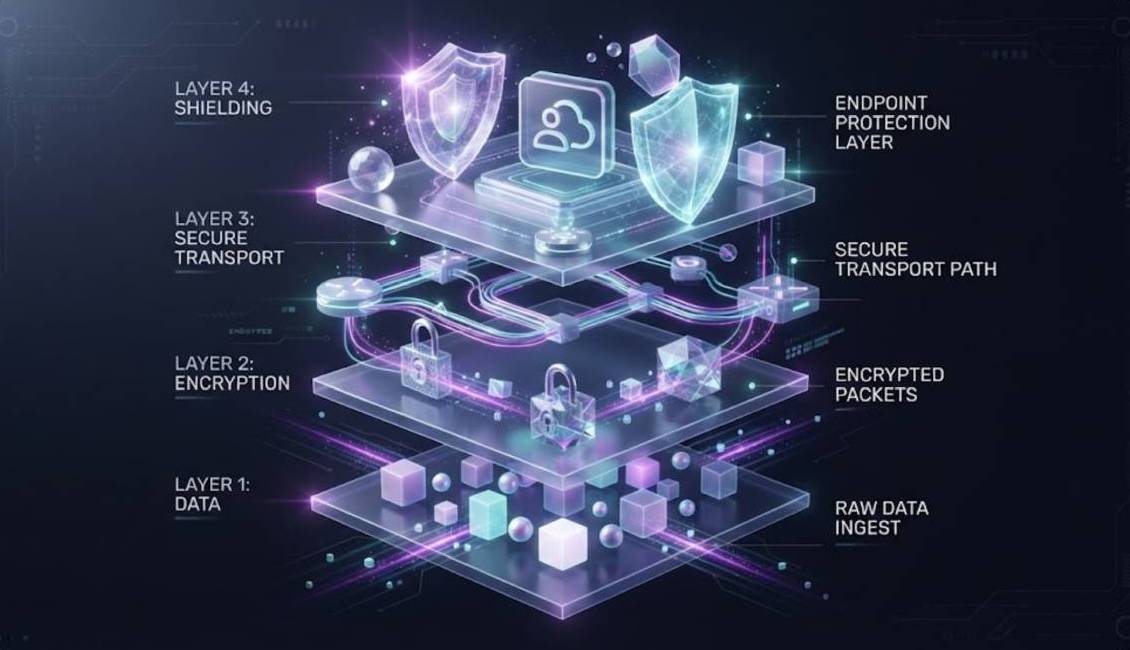
| Cleartext Handshakes | SNI exposes the host | Turn on ECH where the server supports it. |
Finally, a WebRTC leak test in the browser you actually use. Firefox and LibreWolf expose local IPs through WebRTC even behind a tunnel — disable it or use a policy that blocks the surface.
4. Hardening Checklist: Steps to Lock Down Securing Your Home Router
Ensure your operating systems and configuration parameters conform to the following standards:
- Verify Securing Your Home Router: Firewall Policies & Custom Firmware actually starts and stays up after a reboot, not just in the current session.
- Keep one known-good backup and prove it restores before trusting the system.
- Disable every feature you are not using — smaller surface, fewer surprises.
- Log the changes you make with the date, so the next audit is not archaeology.
- Separate this workload from accounts that hold real identity or money.
- Re-test from a clean client, not the machine you configured, to catch blind spots.
Walking through the commands: the update step is not decoration, it pulls patched packages that fix known holes. The interface and route checks show you what is actually listening before you change anything — if a service you did not expect is open, that is your first problem, not the hardening. The sysctl lines flip kernel behavior (anti-spoofing, forwarding) from permissive to explicit, which is the whole point.
How you tell it is wrong: if Securing Your Home Router: Firewall Policies & Custom Firmware breaks, symptoms are specific. Traffic silently fails (forwarding off), DNS resolves to the wrong place (resolver overridden), or a service will not bind (port taken). Read the logs from the box itself, not a remote guess — the local journal is the only source that sees the real rejection.
Keep Securing Your Home Router: Firewall Policies & Custom Firmware boring: documented, tested, and reversible. The setups that survive are the unglamorous ones someone actually wrote down. If you cannot explain why a line is there, it should not be.
A note from doing Securing Your Home Router: Firewall Policies & Custom Firmware on real boxes: the part everyone skips is the rollback. Before you harden, snapshot or export the working config. When a change breaks access at 2am, the snapshot is what saves you — not memory, not a forum post. The five minutes to back up beats the five hours to rebuild.
Concrete verification for Securing Your Home Router: Firewall Policies & Custom Firmware: from a separate machine, run a port scan and confirm only intended ports answer. Open a DNS leak test in the browser you use and confirm the resolver is yours. Reboot and repeat. If any check differs from before, the change did not persist — fix that before calling it done.
Scope check: Securing Your Home Router: Firewall Policies & Custom Firmware is for the host you control. The moment data leaves it — to a cloud app, a friend's server, a third party — different rules apply. Do this part well, then apply the same skepticism to everything that touches the boundary.
5. Frequently Asked Questions (FAQ) Regarding Securing Your Home Router
Will this break my existing setup?
Only if you skip the backup step. Securing Your Home Router: Firewall Policies & Custom Firmware changes are reversible as long as you snapshot first and apply changes one at a time.
Do I need special hardware for this?
For most Securing Your Home Router: Firewall Policies & Custom Firmware deployments, any current consumer machine is enough. Constraints appear only at high throughput, which this guide does not assume.
How often should I re-check the configuration?
Re-audit after every major OS or app update. Settings drift quietly, and a working Securing Your Home Router: Firewall Policies & Custom Firmware config last month is not a working config today.
Disclaimer: The Zenonym research team is dedicated to providing accurate, tested security advice. Digital threat landscapes and software packages change constantly. Verify all configuration scripts inside isolated environments before running them on high-security machines.